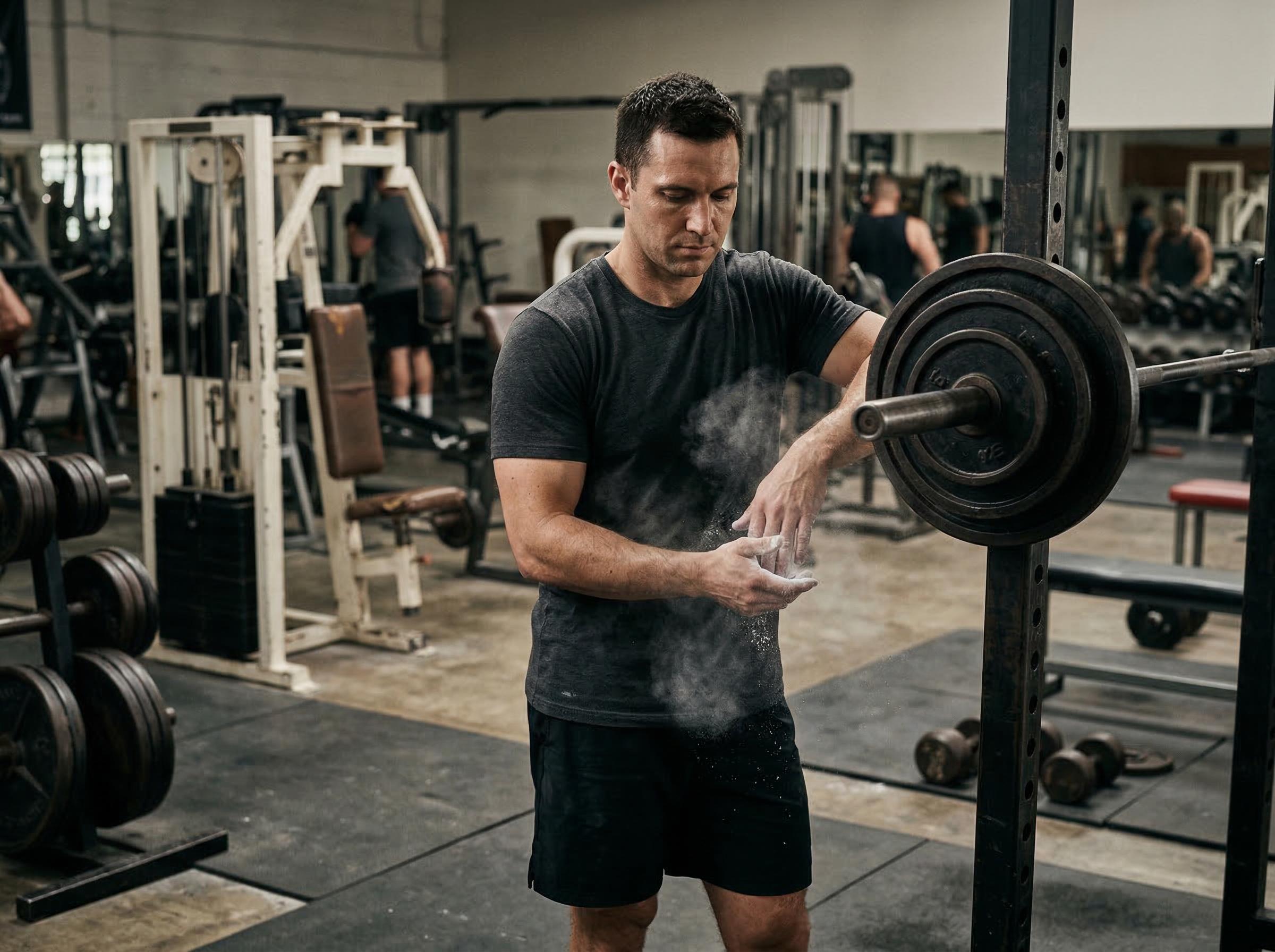
Train Smarter with AI Workouts

Generate custom workouts, warm-ups, stretching flows, and rehab protocols in one place.

AI Workout Generator

Create a custom workout in seconds by entering an influencer name, target muscle groups, and preferred intensity. The AI also generates a matching workout image, builds a ready-to-log template, and lets you organize workouts into folders.

  • Influencer-inspired AI workout generation
  • AI workout cover image creation
  • Folder-based workout organization

Weekly Program Builder

Build complete weekly plans with day-by-day structure. Generate each day as a separate phase, set the target muscles, and define exercise flow with progression notes.

  • Day-by-day weekly split generation
  • Per-day muscle targets and exercise lists
  • Clinical progression and regression notes

Live Tracking

Select a workout template, open it, and log each exercise with reps and weight. Each set uses template-based rest timers with skip support, and one tap can search any exercise in Google for video instructions.

  • Per-set reps and weight logging
  • Rest timers with skip option
  • One-tap Google exercise video lookup

Template Library and Program Descriptions

Preview each template, then open it to read the full coach-style guidance.

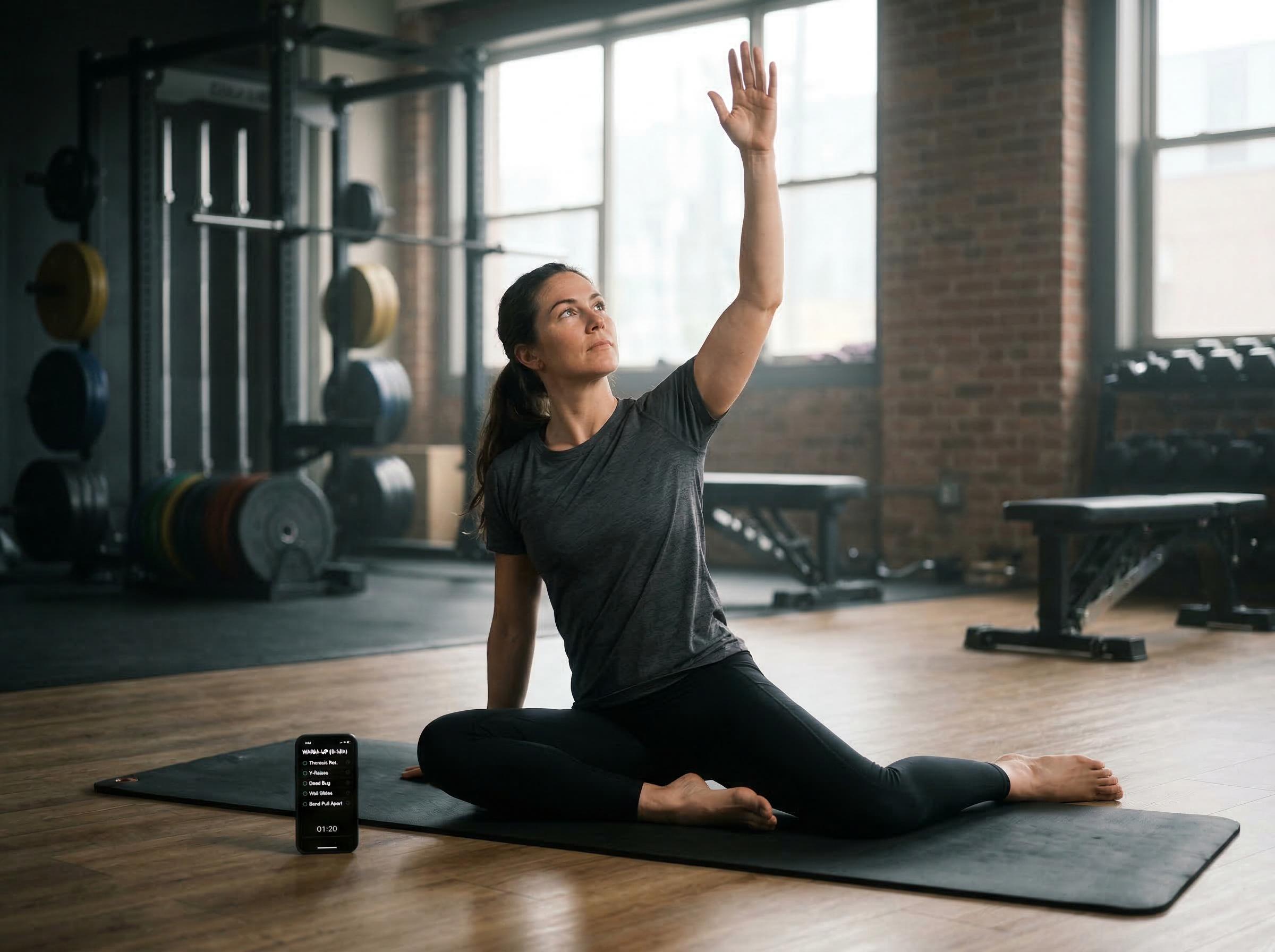
Athlete performing pressing pre-hab mobility sequence in the gym
Warm-up / Pre-hab

Pressing Pre-hab Sequence

An 8-minute pre-hab flow to improve thoracic rotation, open tight pressing tissues, and activate scapular control before upper-body loading.

Read more

Welcome to your pre-hab sequence. As a Physical Therapist, I cannot stress enough that optimal pressing mechanics start before you even touch a weight. If your thoracic spine is locked and your anterior capsule is tight, your shoulders will compensate, leading to impingement and power leaks. This 8-minute protocol is designed to enhance tissue extensibility in the pecs and triceps, lubricate the glenohumeral joint, and activate the serratus anterior for flawless scapular rhythm. Let us prime the nervous system and prepare the tissues for load.

Workout Guidance

We are keeping this under 10 minutes to ensure you are primed, not fatigued. Starting on the mat, we address the thoracic spine with Thread the Needle; if your mid-back cannot rotate, your shoulders will take the brunt of your pressing movements. From there, we move into a dynamic Prone Scorpion to open up the pectoralis major and minor without statically stretching them to the point of neurological weakness. Next, we hit the long head of the triceps with a Kneeling Prayer Stretch. We finish by turning on the motor control with Scapular Push-ups to wake up the serratus anterior, followed by dynamic chest openers and a core-activating walkout. Breathe deeply, move with intention, and optimize your biomechanics.

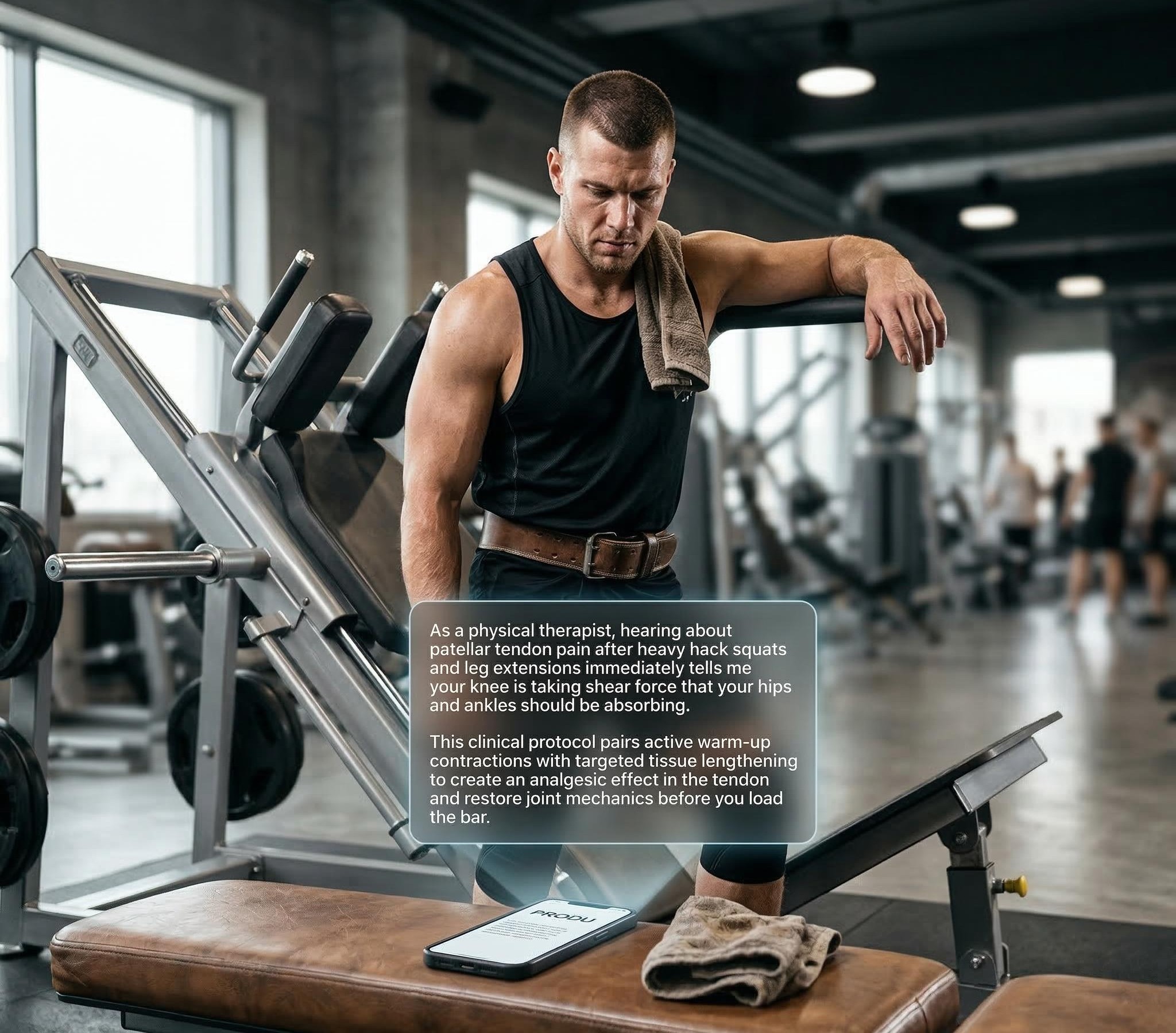
Athlete performing a hack squat during a patellar tendon protocol
Warm-up + Stretching

Patellar Tendon Pain Protocol

A clinical lower-body prep that pairs active warm-up contractions with targeted stretches to unload the knee and improve squat mechanics.

Read more

As a physical therapist, hearing about patellar tendon pain after heavy hack squats and leg extensions immediately tells me your knee is taking shear force that your hips and ankles should be absorbing. This clinical protocol pairs active warm-up contractions with targeted tissue lengthening to create an analgesic effect in the tendon and restore joint mechanics before you load the bar.

Workout Guidance

Welcome to the clinic. Today we are systematically preparing your lower body to handle heavy loads without destroying your patellar tendon. Per your request, we are supersetting an active warm-up movement with a specific stretch. We start with isometric wall sits to create a pain-relieving effect in the tendon, immediately supersetted with a deep hip flexor stretch to remove tension from the knee cap. Next, we activate the glutes and stretch the hamstrings to ensure your posterior chain fires during your RDLs. Finally, we mobilize the ankles and hips so you can hit depth in your squats without your knees taking the brunt of the punishment. Form is everything. Breathe through the stretches, do not rush the transitions, and prep those tissues for battle.

Woman in ACL recovery reviewing a rehabilitation workout on her phone
Rehab

ACL Recovery Journey

A structured clinical progression from early healing to return-to-sport, with a moderate Weeks 3-6 routine focused on control and safe range of motion.

Read more

Welcome to your ACL recovery journey. Rehabilitation is a marathon, not a sprint, and tissue healing dictates our pace. As a physical therapist, the goal is to restore your mechanics safely and effectively. This is your clinical roadmap for recovery after surgery.

  • Week 1-2: Reduce swelling, restore terminal knee extension, and wake up quadriceps recruitment.
  • Week 3-4: Progress knee flexion range of motion, normalize gait off crutches, and add light closed-chain exercises.
  • Week 5-8: Build proprioception, unilateral strength, and foundational leg strength.
  • Week 9-12: Add dynamic stability, light plyometrics if cleared, and straight-line jogging progressions.
  • Months 3-6: Build advanced strength, hypertrophy, and agility.
  • Months 6-9+: Return to sport-specific training, reactive power, and psychological readiness.

Workout Guidance

Today is a moderate-intensity routine for early-to-mid stage recovery (Weeks 3-6). Start with Isometric Quad Sets to re-establish brain-to-muscle connection, then Active Heel Slides for safe flexion. Continue with Straight Leg Raises while locking the quad first to avoid extensor lag. Superset Glute Bridges and Clamshells to activate posterior and lateral stabilizers, then finish with Bodyweight Mini Squats in the 0-45 degree range to protect the patellofemoral joint and graft. Pace yourself, breathe deeply, and listen to pain signals.

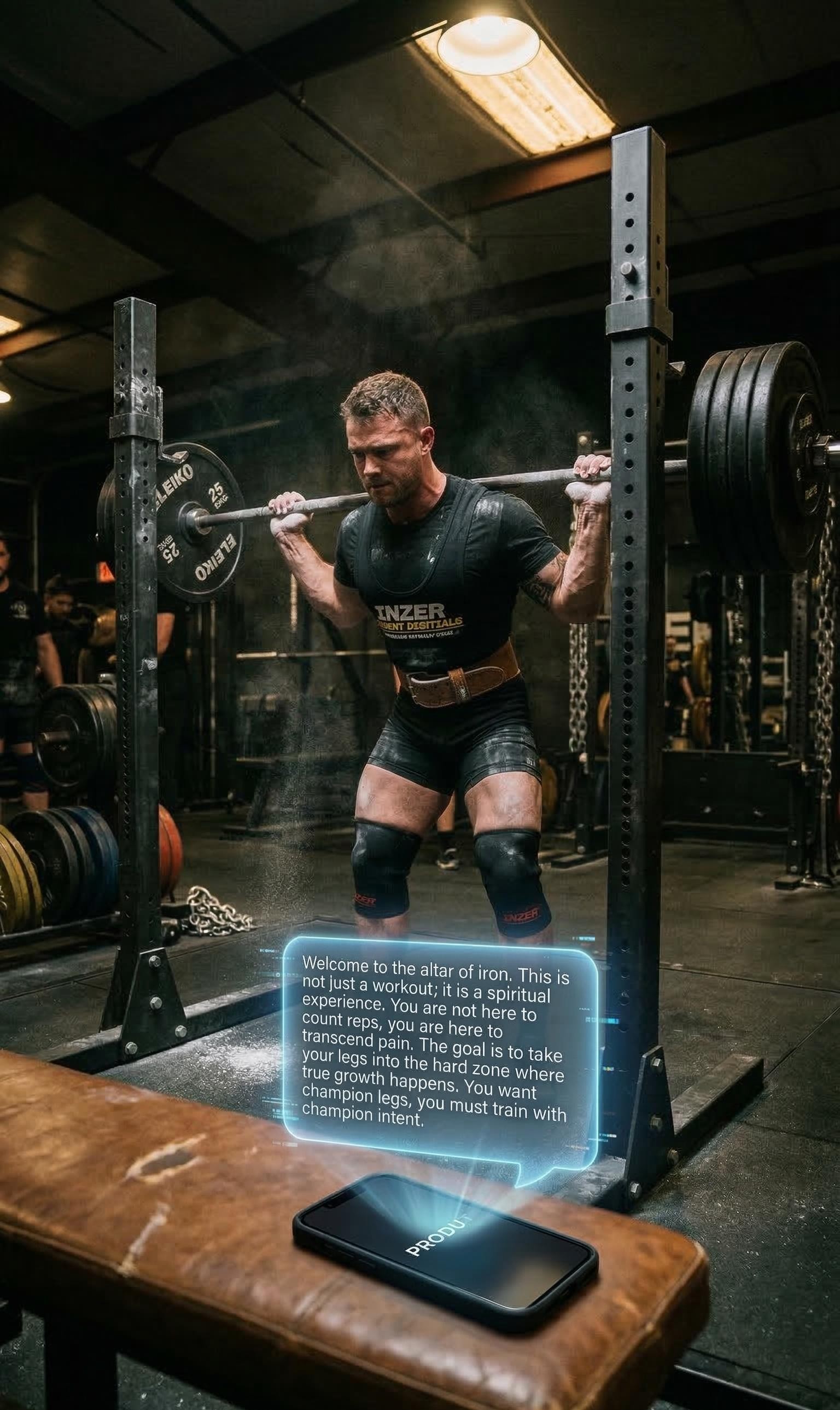
Athlete preparing for a heavy squat while receiving influencer-style coaching on a phone
Influencer Style

As Tom Platz: Leg Day Manifesto

A high-intensity leg blueprint with deep squats as the centerpiece, followed by hack squats, extensions, hamstring volume, and calves.

Read more

Welcome to the altar of iron. This is not just a workout; it is a spiritual experience. You are not here to count reps, you are here to transcend pain. The goal is to take your legs into the hard zone where true growth happens. You want champion legs, you must train with champion intent.

Workout Guidance

The squat is the centerpiece. Spend real time there with strict form, full depth, and controlled negatives. After squats, move to the hack machine for quad sweep, then leg extensions for isolation fatigue. Shift into hamstring curls and stiff-legged deadlifts for posterior thickness. Finish with calves to complete the session. Pace with discipline, but do not hold back effort.

Weekly Program

Clinical ACL Recovery and Neuromotor Re-education

Seven progressive sessions from protection to return-to-function with strict pain and swelling-based progression rules.

Read more

This clinical blueprint is designed for the post-operative ACL patient, specifically starting at Week 2 post-surgery. The primary objectives are swelling management, restoration of full passive knee extension, and re-establishing quadriceps recruitment. The first four weeks focus on graft protection and gentle range of motion (0-90 degrees). Progression is milestone-based: full terminal extension before significant load, pain at or below 3/10, and no post-session effusion increase.

Phase 1 (Weeks 2-3) - Protection and Extension

Target: Quads, Hamstrings, Calves, Core

Exercises: Ankle Pumps, Quad Sets (Isometric), Heel Slides (Assisted), Straight Leg Raises (Braced), Glute Bridges (Double Leg), Seated Calf Pumps, Abdominal Bracing

Notes: Progress if no quad lag and pain is at or below 3/10; regress if extension drops or swelling rises.

Phase 1 (Weeks 3-4) - Early Activation

Target: Quads, Glutes, Hamstrings, Core

Exercises: Quad Sets with Towel Roll, Heel Slides (Active), 4-Way Straight Leg Raises, Standing Hip Abduction, Glute Bridges, Shallow Wall Slides (0-30 deg), Seated Hamstring Sets

Notes: Progress at 90-degree active knee flexion; regress if joint line pain appears in wall slides.

Phase 2 (Weeks 4-6) - Weight Bearing and ROM

Target: Quads, Glutes, Calves, Core

Exercises: Quad Sets, Heel Slides, Straight Leg Raises (Unweighted), Mini Squats (0-30 deg), Standing Calf Raises, Side-lying Hip Abduction, Bird-Dog

Notes: Progress only with normalized gait and no limp; regress if swelling lasts more than 2 hours after training.

Phase 2 (Weeks 6-8) - Strength Foundation

Target: Quads, Hamstrings, Glutes, Calves

Exercises: Mini Squats (0-45 deg), Step-ups (Low Box), Standing Calf Raises, Terminal Knee Extension (TKE), Single Leg Stance Balance, Glute Bridges, Prone Hamstring Curls (Unweighted)

Notes: Progress if single-leg balance exceeds 20 seconds; regress with any giving-way sensation.

Phase 3 (Weeks 8-10) - Neuromuscular Control

Target: Quads, Hamstrings, Glutes, Core

Exercises: Bodyweight Squats (0-60 deg), Step-ups (Medium Box), Single Leg Stance on Yoga Mat, Side-lying Clamshells, Dead Bug, Standing Hamstring Curls, TKE

Notes: Keep knee tracking over second toe; regress if valgus collapse appears.

Phase 3 (Weeks 10-12) - Functional Loading

Target: Quads, Hamstrings, Glutes, Calves

Exercises: Bodyweight Squats (0-90 deg), Static Forward Lunges, Lateral Monster Walks, Single Leg Glute Bridges, Calf Raises, Single Leg Deadlifts (Unweighted), Plank

Notes: Progress to lunges only with controlled squat depth; regress if anterior knee pain rises.

Phase 4 (Weeks 12+) - Return to Function

Target: Quads, Hamstrings, Glutes, Full Body

Exercises: Goblet Squat (Bodyweight), Reverse Lunges, Single Leg Squats (Partial Depth), Calf Raises, Bird-Dog, Side Plank, Hamstring Bridges

Notes: Move into impact and running only after medical clearance and strength testing.
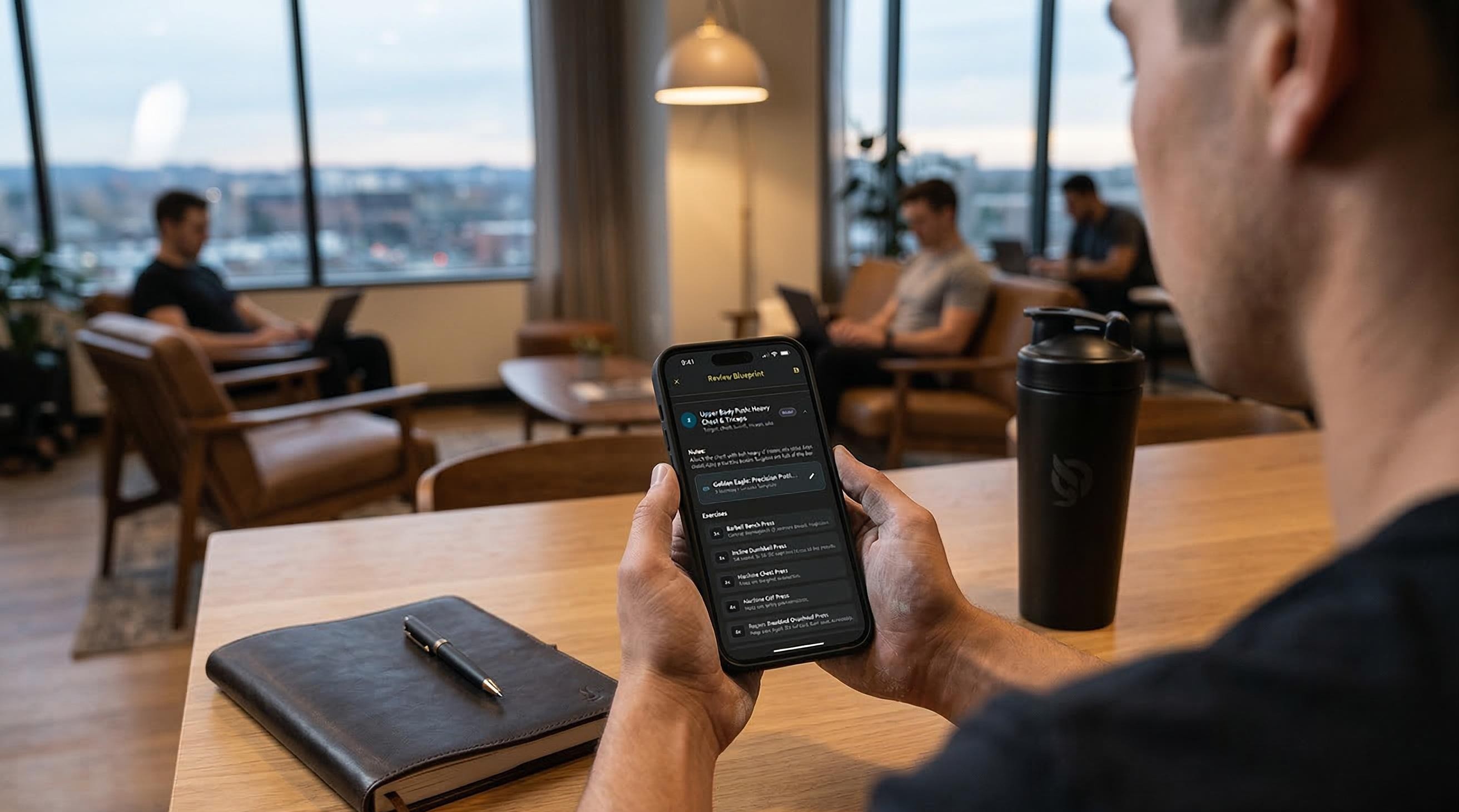
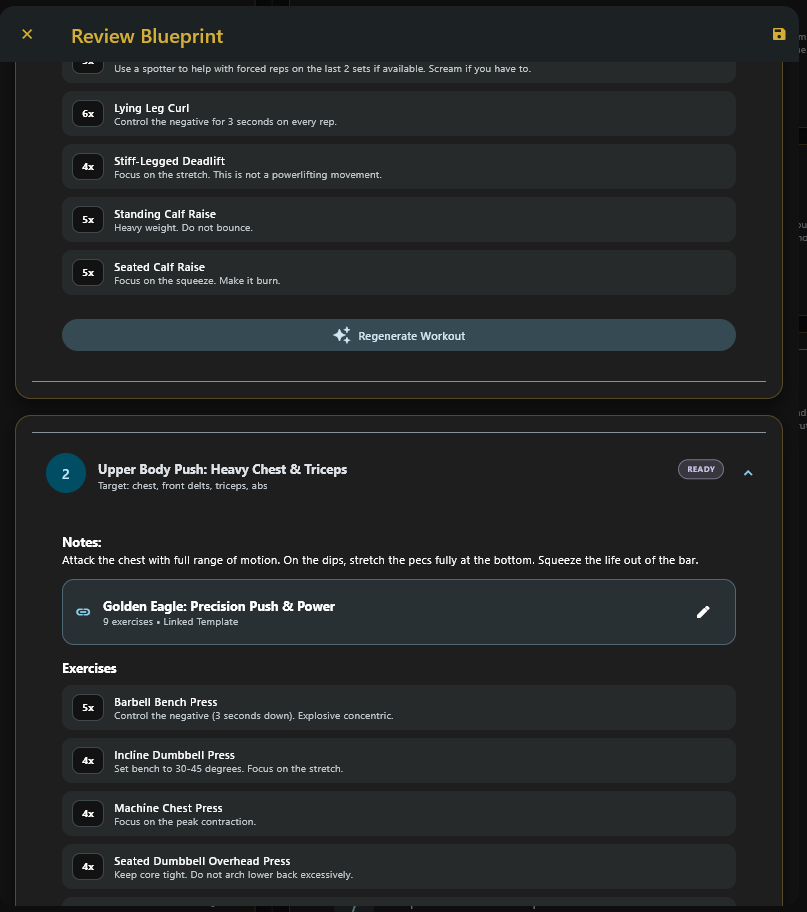
High-intensity weekly workout program visual for blood and guts training split
Weekly Program

Blood and Guts: Weak Point Annihilation

A high-intensity hypertrophy split prioritizing chest and legs with strict tempo, failure-based sets, and beyond-failure methods.

Read more

This split follows High Intensity Training principles, centered on maximum mechanical tension and total muscular failure on key sets. Chest and legs are prioritized with high frequency and pre-exhaust sequencing so the target muscles, not joints, become the limiter. Keep form strict and eccentrics controlled.

Day 1: Chest, Biceps and Abs - Primary Overload

Exercises: Incline Barbell Bench Press, Hammer Strength Seated Flat Press, Incline Dumbbell Flyes, Cable Crossovers, Straight Barbell Curls, Seated Dumbbell Curls, Hanging Leg Raises

Notes: Use a 2-second eccentric on every rep; sub Smith flat press if Hammer Strength is occupied.

Day 2: Quads and Calves - The Squat Foundation

Exercises: Leg Extensions, Barbell Squats, Leg Press, Hack Squat, Standing Calf Raises, Seated Calf Raises

Notes: Pre-exhaust with extensions before heavy squats; keep hack squat depth controlled.

Day 3: Back, Traps and Forearms - Thickness and Width

Exercises: Nautilus Pullover Machine, Underhand Grip Lat Pulldown, Yates Rows, One Arm Dumbbell Row, Smith Machine Shrugs, Reverse Barbell Curls

Notes: Use pullovers to isolate lats; keep 45-degree torso angle for Yates rows.

Day 4: Chest, Shoulders and Triceps - Push Density

Exercises: Decline Hammer Strength Press, Seated Dumbbell Shoulder Press, Dumbbell Lateral Raises, Cable Lateral Raises, Triceps Pushdowns, Lying EZ-Bar Triceps Extensions, Rope Crunches

Notes: Start with decline pressing for lower chest loading; lock out triceps with a controlled squeeze.

Day 5: Hamstrings, Calves and Biceps - Posterior Power

Exercises: Lying Leg Curls, Stiff-Legged Deadlifts, Single Leg Press (High Foot Placement), Donkey Calf Raises, Preacher Curls, Hammer Curls

Notes: Emphasize hamstring stretch under control; use Smith variation if donkey machine is unavailable.